Author Archives: Andrew Burn

2016 – Gabrielle Cliff Hodges – Harold Rosen lecture
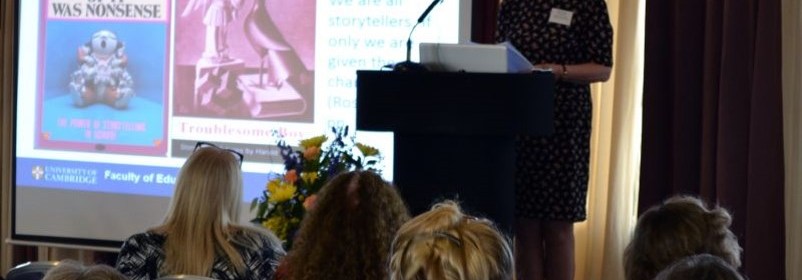
The 9th Harold Rosen lecture, “Who’ll Tell the Story?”, was given by Gabrielle Cliff Hodges at the UKLA 2016 conference. Gabrielle is a former English teacher and Head of English, and is currently a University Senior Lecturer in Education at the University of Cambridge, where she leads the English PGCE programme. The lecture re-visited some of Harold Rosen’s powerful arguments in

Read more

Opie Award for Children’s Games book

Professor Andrew Burn and Dr Chris Richards have won the American Folklore Society’s Opie Prize for their co-edited book, Children’s Games in the New Media Age: Childlore, Media and the Playground (Ashgate, 2014). The prize reflects the collaborative effort of the authors in the book, including Professor Jackie Marsh, Dr Julia Bishop, Dr John Potter, Grethe Mitchell and Andy Clarke,

Read more

Games for Engineering

Teaching engineering through video games Oct 19, 2016 01:30 PM Location: UCL Knowledge Lab, 29 Emerald St, London WC1N 3QS Diarmid Campbell, Cambridge University Engineering Department, gave this seminar as part of the UCL Knowledge Lab’s lunchtime seminar series. His starting premise was: Businesses in the UK want to hire more high-calibre engineers. If kids were as passionate and knowledgeable

Read more

Panopticon Pandemonium game released!

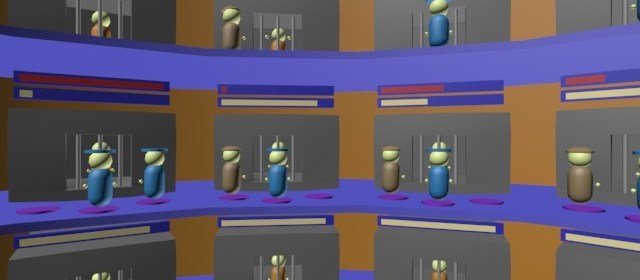
Panopticon Pandemonium: bringing to life Jeremy Bentham’s controversial, unrealised prison. Download the game free, and play it! For around a decade of his life until 1803, the renowned English philosopher and reformer, Jeremy Bentham (1748–1832) lobbied the British government to build a ‘panopticon’ prison of his design. Bentham had envisaged an ‘Inspection House’—a circular building with the prisoners’ cells arranged

Read more

Re-program, Re-play, Re-wind

‘Re-program, re-play, rewind: an alternative history of computer game creation in 1980s Britain’ is an AHRC early career fellowship award (2016-2017) that will examine the role of type-in computer program listings found in magazines and books during the 1980s. The project is collecting oral histories and interviews with people who wrote and used program listings for the various microcomputers that

Read more

English 3 to 19: A Better Plan

CLPE, NAAE, NATE and UKLA have come together to make a common statement about the curriculum and assessment in English across the whole school age-range. The statement sets out a better plan for the teaching and assessment of English 3 to 19 than is contained in current statutory requirements. It represents the views of the National Association of Advisers in English, the

Read more

Now the Chips are Down

This new book by DARE’s Alison Gazzard, coming soon from MIT Press’s Platform Studies series, explores the history of the BBC micro and its relation to gaming cultures of the 1980s. In 1982, the British Broadcasting Corporation launched its Computer Literacy Project, intended “to introduce interested adults to the world of computers and computing.” The BBC accompanied this initiative with television

Read more

Beowulf games with UCL Anglo-Saxon

A group of students of Anglo-Saxon have been developing videogames exploring Beowulf, led by Dr Vicky Symons and Professor Richard North. Here you can see four examples: a ‘manuscript game’ which explores the Beowulf manuscript’s context; a game level from Beowulf’s point of view; a game level from Grendel’s point of view;  and a revenge game based on the Finnsburg

Read more

Beowulf at Game City

Young game-designers had the chance to make their own games using the programming system and visual assets of Missionmaker during Game City’s halfterm workshops at the National Videogame Arcade in Nottingham. The workshop was part of the Playing Beowulf project, and was led by Alison Gazzard, Abel Drew and Andrew Burn. The workshop had capacity for five participants, and was

Read more
« Older Entries Recent Entries »