Category Archives: Projects

Cultures of Digital Production and Moving Images

This special issue of the Nordic Journal of Digital Literacy focuses on young people’s production of moving image work in Europe. Introduced by Øystein Gilje and Brit Svoen, it situates the edition in the tradition of media literacy research work, especially in the UK, Scandinavia and the US, over the last three decades, and highlights discussions of policy opportunities in Europe,

Read more

Creativeworks London

Creativeworks London is the new Knowledge Exchange hub for London, funded by the Arts & Humanities Research Council. It brings new collaborative research opportunities to London’s creative businesses. The Institute of Education is one of thirty-eight London-based universities, colleges, museums, libraries and archives. Together we have unrivalled skills and expertise that can be of benefit to SMEs who are interested in exploring areas

Read more

Childhoods and Play

The ‘Childhoods and Play‘ project is focused on the archival collection of Iona (1923) and Peter Opie (1918-1982) relating to the play and traditions of children. The internationally significant collection contains information contributed by some 20,000 British children, as well as the Opies’ own observations and sound recordings, and is distributed between the Bodleian Libraries, the Folklore Society archives, and

Read more

Creative Europe: New Opportunities for Film and Media Literacy

The EU Commission – DG Education and Culture, Media and Media Literacy Unit – organised the EU Conference CREATIVE EUROPE – NEW OPPORTUNITIES FOR FILM AND MEDIA LITERACY in Brussels on 16th November 2012. The Conference presented an overview of the Commission’s proposal for the Creative Europe Programme and the state of play of the EU media literacy policy. In

Read more

Film Literacy in Europe

This project, funded by the European Commission, was a study of film education in 32 EU member states. The project was conducted by the BFI, the UCL Institute of Education, and Film Education. It studied a range of questions, including how film education is perceived in the different countries, what kinds of provision are made and for whom, and where

Read more

MODE and the kineikonic mode

MODE is the ESRC research methods node for multimodal methodologies and digital environments. Led by Carey Jewitt at the Institute of Education, University of London, it developed and disseminated expertise across of range of methodological themes, including embodiment, transcription methodologies, social networking and digital video data. Andrew Burn led on mixed methods approaches to multimodal analysis, and on the development of

Read more

Playing Shakespeare

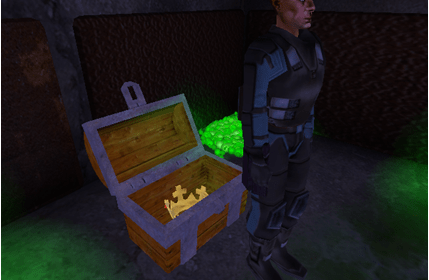
This project was funded as one of 30 pilots under the AHRC’s Digital Transformations programme. It developed an authoring tool for young people to use to make computer games based on Macbeth. It was a collaboration between the DARE research centre at the UCL Institute of Education, Shakespeare’s Globe, Immersive Education Ltd, and Coleridge Community College in Cambridge, a campus

Read more

Macbeth, Montage and Machinima

A DARE event presented for the Culture Capital Exchange INSIDE/OUT FESTIVAL Blue Room, British Film Institute Southbank Thursday October 25th 3 – 5pm This event featured presentations by participants in two projects from the DARE (Digital Arts Research Education) Collaborative at the Institute of Education (IOE), working with partners in the British Film Institute (BFI) and at London’s Globe Theatre. 

Read more
« Older Entries Recent Entries »